{:en}
[wp_ad_camp_1]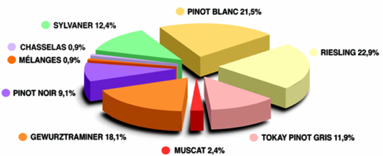
[wp_ad_camp_1]{:}{:es}
[wp_ad_camp_1]
[spacer height=”20px”]
Alsacia, esta bellísima región, siempre ha sido disputada entre los dos vecinos y poderosos países, porque geográficamente se encuentra entre Francia y Alemania. Enclavada entre los montes Vosgos y el río Rhin, en los últimos 126 años ha cambiado de nacionalidad cuatro veces. Las tribus germánicas que ocuparon esta región hace muchos siglos, dejaron su sello indeleble en la arquitectura, costumbre, lenguaje y cocina. Originalmente habitada por los galos, se germanizó después de la caída de Roma y posteriormente se unió al Sacro Imperio Romano-Germánico hasta que parte de éste se rindió a Francia, y por el Tratado de Westphalia, Alsacia pasó a formar parte de esta nación. Desde 1870 ha resistido tres guerras franco-alemanas sin que cambie su personalidad.
[spacer height=”20px”]
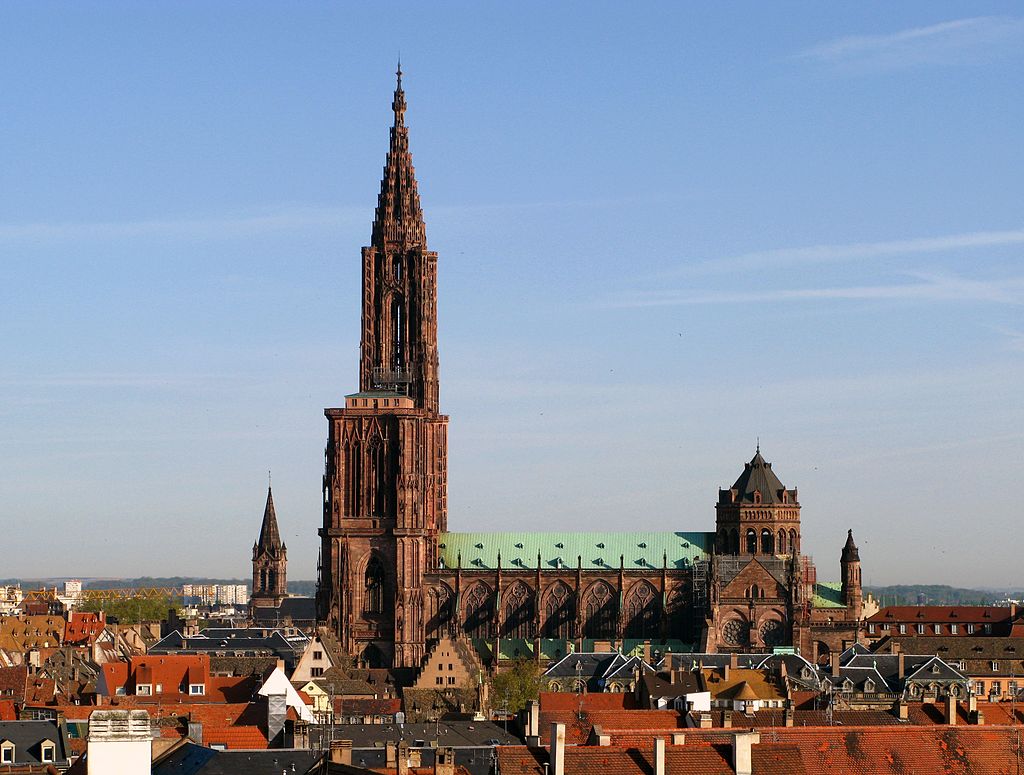
Esta bella y disputada región es famosa por sus vinos y por su gastronomía. Estrasburgo, la principal ciudad y el corazón cultural de la región, cuenta con una bellísima catedral del siglo XIII, muy diferente en su portada del resto de las catedrales góticas, por su gran roseta y por la filigrana de piedra. Tiene una torre de 170 m de altura, que es el monumento más alto de la cristiandad. El Palacio de Rohan es ahora un museo que cuenta con una extensa colección de porcelanas. Además hay un museo de arte moderno.
[spacer height=”20px”]
Como detalle curioso, la Marsellesa no se compuso en Marsella sino en esta ciudad. La parte antigua, la llamada Pequeña Francia, nos muestra antiguas casas y construcciones que miran hacia los canales que comunican el río Ill con el Rhin.
[spacer height=”20px”]
Es una ciudad en donde se puede comer extraordinariamente bien. El restaurante “El Cocodrilo”, bueno y caro, tiene como platillos especiales la sopa de berros y rana, el salmón con espárragos silvestres y los medallones de jabalí. Pero el de mayor fama y belleza arquitectónica es el “Mesón Kammerzell”, una construcción del siglo XVI con mucha madera y ventanales multicolores; en el primer piso se encuentra comida tradicional y en los dos pisos superiores, comida contemporánea. Aquí se encuentra la mejor terrine de conejo y el mejor foie-gras trufado, naturalmente para acompañar con un fino Riesling. También el choucrout, la merluza a la mostaza, la tarte flambée y el ciervo con spaëtzle, son especialidades de la casa.
[spacer height=”20px”]
Puede uno viajar desde Estrasburgo a Colmar – que es la capital del vino alsaciano – ya sea por autopista o por la llamada “Ruta del Vino” que pasa por los pequeños pueblos de la región, productores de vino. De todos estos, la Perla de Alsacia, Riquewihr, es el más pintoresco, con sus casa de madera y tejados inclinados, en donde no es raro ver grandes nidos de cigüeñas, que más que en París, habitan en esta región. En Riquewihr se encuentran los vinicultores más afamados de la comarca, que son Hugel & Fils., Trimbach y Dopff & Irion.
La mayor parte de los turistas llegan al castillo de Haut-Koenigsburg, que es el lugar más visitado. El castillo original fue destruido por los suecos en 1633, pero al iniciarse el siglo XX la ciudad vecina de Selestat se lo entregó al Kaiser Guillermo II, el cual lo mandó restaurar, aunque no quedó como era anteriormente.
[spacer height=”20px”]
Muy cerca del castillo está la población de Illhaeusern, en donde se encuentra uno de los establecimientos de mayor renombre en Francia, el “Auberge de l’lll”, que es uno de los 25 restaurantes en todo el país que ha sido honrado con tres estrellas de la guía Michelín. Se encuentra junto al río y puede uno comer en el exterior, contemplando el bello paisaje. La lista de especialidades es muy grande y en ella tenemos a la langosta en ensalada, el salmón en soufflé, al cordero asado y de postres al kugelhopt, que es un pastel con nueces y frutas secas.
[spacer height=”20px”]
En Alsacia las uvas nobles son las mismas que del otro lado del Rhin, pero sus vinos son muy diferentes: absolutamente secos, firmes y aromáticos. Se utilizan botellas alargadas de tipo flauta (como en Alemania), pero más altas; generalmente son de color verde y la etiqueta es muy simple y sencilla de leer. Los vinos no llevan el nombre de la región o del productor y simplemente destacan el nombre de la uva que se utiliza en su elaboración, en una proporción del 100%.
[spacer height=”20px”]
Las uvas nobles de la región son: la RIESLING, que es la más fina y la más plantada de la región; produce vinos secos que pueden variar en estilo, desde frescos, abiertos y elegantes, hasta flexibles, firmes y aromáticos. La uva GEWÜRZTRAMINER tiene un aroma y sabor especializado, como su nombre lo indica (Gewürz = especia). La llamada TOKAY DE ALSACIA que en realidad es una Pinot Gris, que tiene una estructura firme con un perfume y sabor delicados. La MUSCAT, que en Alsacia produce el único vino seco en el mundo, porque en cualquier otro lado los vinos hechos con esta uva, son dulces. Últimamente se están haciendo unos vinos con uvas sobremaduras de estas cuatro variedades nobles, vinos dulces y de cuerpo, que se llaman de VENDAGE TARDIVE. Cuando las uvas han sido sometidas a la “podredumbre noble” por la acción del hongo Botrytis cinerea, los vinos, muy dulces y costosos se denominan SELECCIÓN DE GRANOS NOBLES.
[spacer height=”20px”]
Por último, la uva SYLVANER, que da origen a un vino seco y fresco, quizá el más popular en la región. Hay que mencionar que, aunque raros, también se elaboran algunos vinos rosados, deliciosos, en la población de Marlenheim y otros tintos, en Ottrot. También se encuentran vinos espumosos de gran calidad: los llamados CREMANT DE ALSACE.
[spacer height=”20px”]
Después de hablar de esta bella provincia no nos queda más que ir a conocerla y a disfrutar de su extensa gastronomía y sus magníficos vinos.
[spacer height=”20px”]
[spacer height=”20px”]
[wp_ad_camp_1]
{:}