{:en}
{:}{:es}
[wp_ad_camp_1]
El vino dulce se toma con el postre o solo, con unas galletas, con almendras o avellanas. En ocasiones se puede tomar antes de las comidas, como aperitivo, acompañado de alimentos grasos, como el foie gras o un buen paté, o con alimentos de sabor fuerte como el caviar, el arenque o los quesos azules, como el roquefort o el grogonzola.
A quién pueden gustar este tipo de vinos?
Esta es una frase que se oye frecuentemente, sobre todo entre los señores, que piensan que solamente las mujeres pueden disfrutar estos vinos. Pero me pregunto….cuáles vinos han tomado para calificarlos así?
En la antigüedad la mayor parte de los vinos eran vinos blancos y en el siglo XIX los vinos blancos dulces eran altamente apreciados. Los zares tomaban Château d’Yquem y Tokaji Eszencia. El problema fue que en el siglo XX los vinos dulces dejaron de estar de moda y se desarrolló el gusto por vinos blancos secos, ligeros y frutales.
Necesita uno saber algo del proceso de vinificación para poder apreciar estos vinos. Hay dos tipo de vino dulce:
1- Vino dulce natural o vino fortificado: se detiene la fermentación por la adición de alcohol, quedando azúcar residual. Ej. : oporto, madeira.
2-Vino naturalmente dulce o vino licoroso: por la cantidad de azúcar que tienen las uvas, se detiene la fermentación espontáneamente, al llegar a los 15.5º de alcohol, por que las levaduras ya no pueden actuar con ese nivel de alcohol, y entonces queda una cantidad de azúcar sin fermentar, lo que le proporciona dulzor al vino.
Hay dos clases de vino licoroso:
1- Aquellos en que la uva se ha dejado sobremadurar en el viñedo y por lo tanto tienen alta concentración de azúcar, son los llamados “vinos de cosecha tardía”.
2- Los vinos llamados “selección de granos nobles”, que se elaboran con uvas afectadas de “podredumbre noble”.
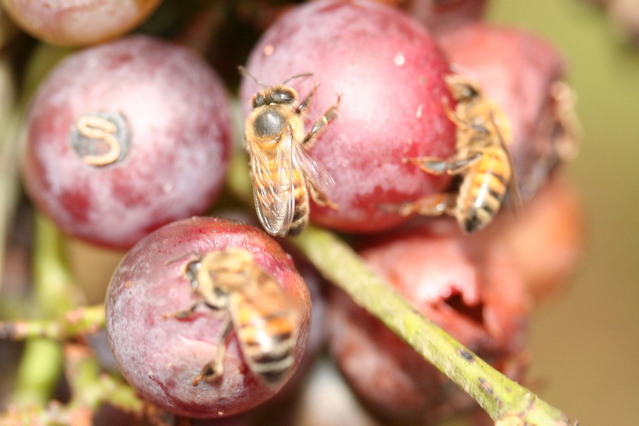
La podredumbre noble es debida al hongo Botrytis cynerea que ataca a la uva cuando está madura, perforando el hollejo con sus filamentos (hifas) y haciendo que, al evaporarse el agua de la pulpa, se concentren los aromas y los sabores. El hongo tiene aspecto de polvo grisáceo, aterciopelado y se desarrolla cuando hay mañanas húmedas y con niebla y tardes asoleadas.
Los “vinos licorosos” se elaboran en Francia, en las regiones de Sauternes, Barsac, Loupiac, Cadillac y Monbazillac. En estos lugares se producen los vinos dulces de mayor prestigio.
Entre los vinos licorosos se encuentra el Vino de Paja de la región francesa de Jura. En este lugar se cosecha la uva y se extiende en repisas con paja para que se seque y se llegue a la concentración necesaria de azúcar, que es de 306 gm./l. El vino tiene 14º de alcohol y está equilibrado en cuanto al azúcar y la acidez. Es obligatorio darle tres años de barrica, antes de embotellarlo.
En Alsacia los vinos dulces son los llamados “ vinos de cosecha tardía” (late harvest) y los que se denominan “selección de granos nobles” que son vinos con “podredumbre noble”.
En Alemania existen muchos vinos dulces de cosecha tardía, entre los cuales están los Spätlese y los Auslese y los vinos que tienen “podredumbre noble” (edelfaule) que se llaman Beerenauslese y Trockenbeerenauslese.
En Italia y regiones mediterráneas con abundante sol y clima seco, como en Sicilia y la isla de Panteleria, este tipo de vino se obtiene por el secado de la uva al sol, para que el agua se evapore y se concentre el azúcar.
En España y el sur de Francia los vinos dulces tienen más de 15º de alcohol, son vinos potentes y de buen equilibrio.
En días pasados hubo una cata de vinos de cosecha tardía, en donde se degustaron vinos de diferentes países, España, Chile, México, Argentina y Canadá. El vino que más llamó la atención fue un Moscatel Vendimia Tardía 2013 de la bodega Ochoa de Navarra, con 15º de alcohol. Aroma floral con toques de miel y un buen balance de azúcar y acidez.
{:}